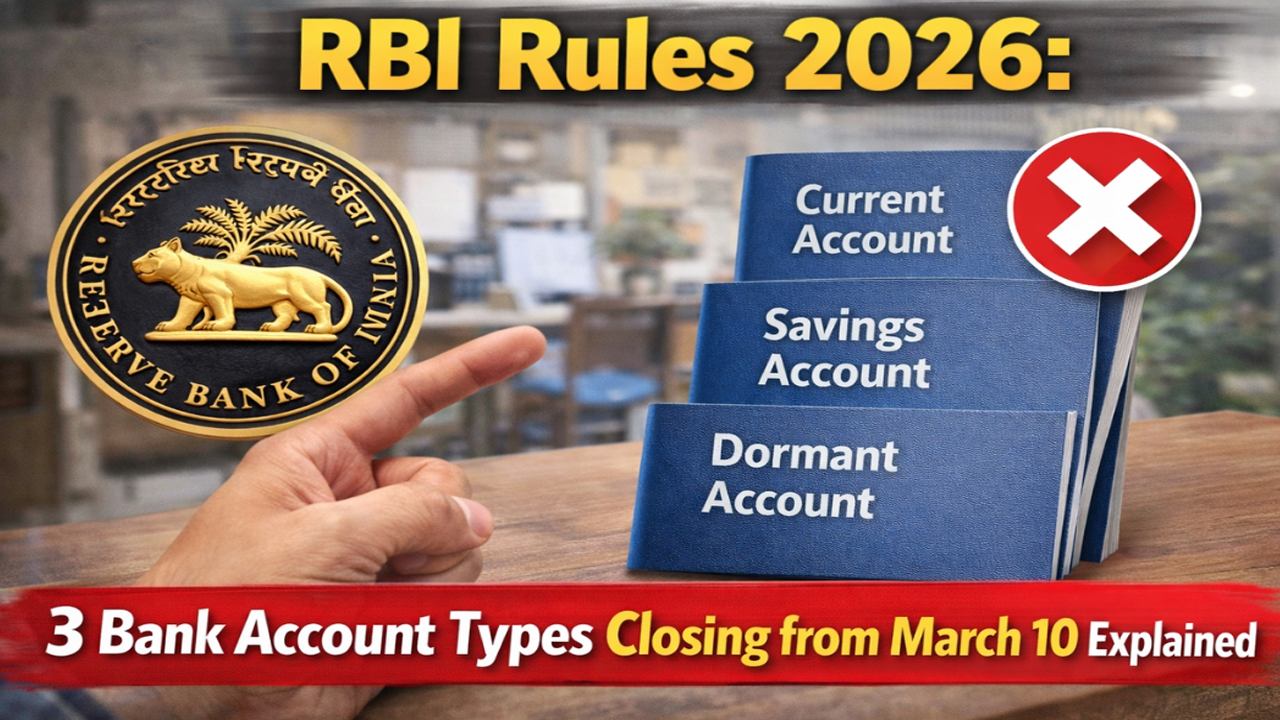
RBI Rules 2026: The Reserve Bank of India has issued a crucial directive affecting several bank account categories across the country, effective from March 10, 2026. This regulatory move requires specific types of accounts to be closed or migrated, aiming to strengthen compliance with updated banking norms and reduce dormant or inactive accounts.
With millions of account holders potentially impacted, understanding the rules, affected account types, and required actions is essential for individuals and businesses alike. Here’s a detailed breakdown of what account holders need to know.

Key Highlights
The new RBI rules enforce the closure or conversion of three primary account types:
- Accounts inactive for over 10 years
- Accounts with incomplete KYC (Know Your Customer) documentation
- Special savings accounts linked to legacy schemes discontinued by banks
The move seeks to:

- Enhance security and regulatory compliance
- Reduce the number of dormant accounts in the banking system
- Encourage account holders to update personal and financial information
- Streamline banking operations and improve efficiency
Account holders are advised to act promptly to avoid automatic closure or migration by banks.
Inactive Accounts
Accounts that have not had any transactions for a decade fall under the RBI closure mandate. Key points include:

- No deposits, withdrawals, or transfers for 10 years or more
- Automatic notification from the bank before closure
- Remaining balance transferred to the Depositor Education and Awareness Fund (DEAF) if not claimed
- Opportunity for account reactivation if proper documentation is submitted
Bank customers should check their transaction history and update accounts to maintain access.
Accounts with Incomplete KYC
Accounts lacking valid KYC documentation are targeted under the new directive. Highlights include:

- Valid proof of identity and address is mandatory
- Banks will issue alerts requesting updated documents before the March 10 deadline
- Accounts failing to comply may be frozen or closed
- Customers can submit documents online or at branch locations to prevent closure
This step ensures adherence to anti-money laundering regulations and improves overall financial transparency.
Legacy Savings Accounts
Certain older savings schemes, often linked to discontinued or legacy banking programs, are also affected. Features of these accounts include:

- Low or zero transaction fees, maintained under historical schemes
- Limited online banking integration
- Automatic closure or migration to standard savings accounts
- Notification by banks with options to transfer funds or convert accounts
Account holders are encouraged to review account statements and consult their bank for smooth transition options.
Steps for Account Holders
To comply with the new RBI rules, individuals should:

- Verify the type and status of all bank accounts
- Update KYC documents well in advance of March 10
- Transfer or withdraw funds from accounts scheduled for closure
- Consider consolidating multiple accounts to avoid redundancy
- Contact banks directly for clarification on legacy account conversions
Proactive action will ensure uninterrupted access to banking services.
Impact on Customers
The closure of these account types will affect millions of customers. Key considerations include:

- Avoiding loss of funds due to unclaimed balances
- Ensuring compliance with updated banking regulations
- Preventing inconvenience from frozen or inaccessible accounts
- Improving personal financial management and security
Banks are required to provide clear communication and guidance to affected account holders.
Final Verdict
The RBI’s 2026 directive represents a significant effort to modernize the banking system, enforce compliance, and protect depositor interests. Individuals and businesses must review their account portfolios, complete pending KYC requirements, and manage legacy accounts to prevent disruptions.
By acting promptly, account holders can ensure continuity of service, secure their funds, and align with India’s evolving banking regulations.
