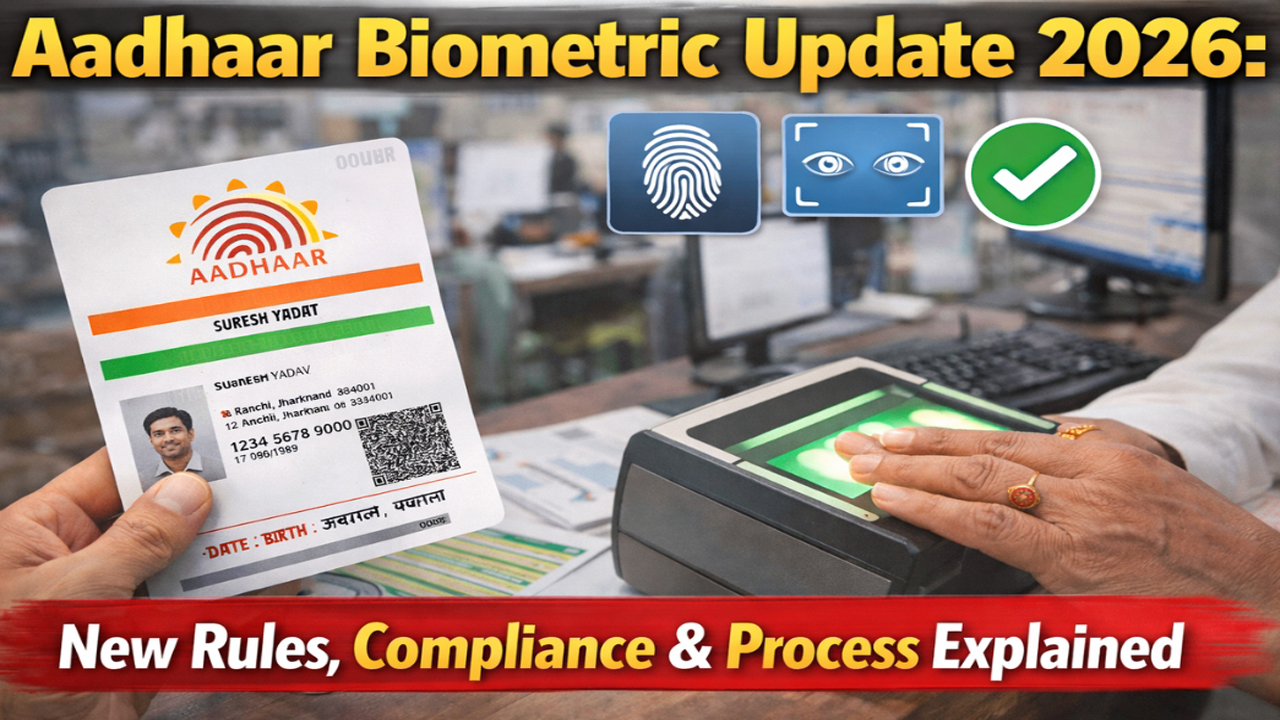
Aadhaar Biometric Update 2026: The 2026 Aadhaar biometric update introduces a new framework for maintaining the accuracy and security of biometric records under the Unique Identification Authority of India. With enhanced compliance requirements, these updates are designed to safeguard identity verification systems while streamlining the process for residents across India.
The new rules emphasize periodic biometric verification, secure handling of personal data, and simplified procedures for updating fingerprints, iris scans, and facial recognition records. This ensures that all citizens and residents have up-to-date credentials compatible with digital service platforms and government schemes.

Key Highlights
The 2026 Aadhaar biometric update introduces several critical changes:
- Mandatory update of biometrics for individuals above 60 years at intervals of ten years
- Optional update for individuals below 60 years to maintain record accuracy
- Enhanced security protocols for biometric data capture and storage
- Integration with national digital identity platforms for seamless verification
- Mobile enrollment and update services for remote or differently-abled residents
- Audit trails and compliance monitoring for all biometric update requests
- Penalties for institutions failing to adhere to updated verification norms
- Real-time confirmation of successful updates via SMS or email
These measures reinforce trust in Aadhaar as the cornerstone of identity verification in India.

Eligibility Criteria
To request a biometric update under the 2026 rules, the following conditions apply:
- Resident must possess a valid Aadhaar number
- Biometric records must be verified for authenticity and prior updates
- Updates can be requested at authorized Aadhaar centres or via approved mobile services
- Minors above 5 years can update fingerprints and iris scans; facial updates are optional
- Residents who have undergone major physiological changes affecting biometrics are encouraged to update records
Clear eligibility ensures updates are applied accurately and systematically.

Process for Biometric Update
The updated procedure streamlines enrollment while emphasizing security:
- Visit an authorized Aadhaar enrolment or update centre
- Provide valid identity proof linked to your Aadhaar number
- Submit request for fingerprint, iris, or facial biometric update
- Biometric data is captured using certified scanners with encryption protocols
- Confirm details on the biometric verification screen before submission
- Receive acknowledgment slip with update request number
- Track status online through the UIDAI portal or mobile application
- Once processed, confirmation is sent via SMS/email
The end-to-end system ensures both convenience and privacy during biometric updates.

Security and Compliance
Under the 2026 framework, stringent measures are enforced to protect biometric data:
- End-to-end encryption during data capture and transmission
- Multi-factor authentication for update personnel
- Real-time audit logs to detect unauthorized access attempts
- Compliance with Information Technology (Reasonable Security Practices and Procedures and Sensitive Personal Data or Information) Rules
- Mandatory data anonymization in analytical or reporting use
- Regular inspection and certification of biometric devices
- Secure retention of logs and records for legal and verification purposes
These steps reduce the risk of data breaches while maintaining a high level of identity assurance.

Common Challenges and Solutions
Residents may encounter specific issues during biometric updates:
- Fingerprint mismatch due to wear or injury: update iris or facial biometrics instead
- Long waiting times at enrolment centres: utilize appointment booking via the UIDAI portal
- Connectivity issues for remote updates: mobile enrolment units provide offline capture with secure sync
- Name or demographic inconsistencies: resolve by updating demographic information alongside biometrics
- Elderly or differently-abled users: assistance is available at all authorized centres
Proactive management of these challenges ensures smoother update experiences.

Legal and Regulatory Implications
Non-compliance with Aadhaar biometric rules carries regulatory consequences:
- Unauthorized modification or duplication of biometric data is punishable under the Aadhaar Act 2016
- Institutions failing to validate updated biometrics may face penalties
- Updates are legally recognized once recorded and confirmed in the UIDAI database
- Citizens have the right to request rectification under data protection provisions
- Biometric updates are essential for seamless access to government services and subsidies
Awareness of these rules ensures both individuals and institutions maintain proper compliance.

Cost and Availability
The 2026 biometric update is designed to be accessible to all residents:
- No fee for voluntary biometric updates within the eligibility criteria
- Minimal charges may apply for re-enrollment in exceptional cases
- Updates are available at over 45,000 authorised enrolment centres nationwide
- Mobile enrolment units extend services to remote and rural areas
- Scheduled timings and online appointment systems reduce queue times
The nationwide coverage ensures that updates are convenient and widely accessible.
Final Verdict
The 2026 Aadhaar biometric update framework strengthens India’s identity verification ecosystem by combining security, compliance, and user convenience. By ensuring accurate and up-to-date biometric records, residents gain seamless access to digital services, government schemes, and authentication platforms. With clearly defined procedures, robust security measures, and nationwide availability, the update represents a significant advancement in the reliability and trustworthiness of Aadhaar-based identification.
